
How to Propagate Pothos: Easy Water, Soil & Cutting Methods
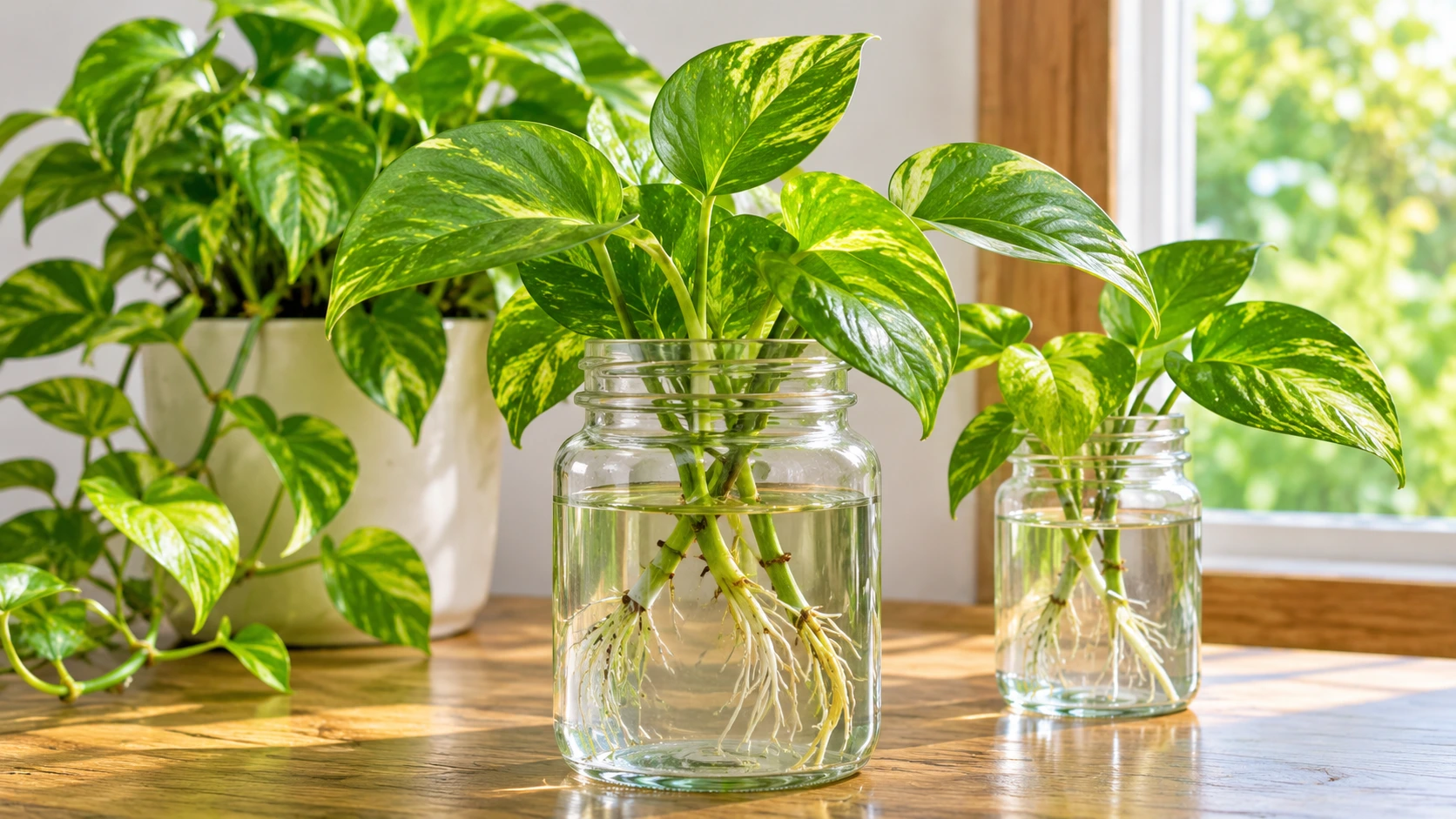
How to Propagate Pothos: A Complete Beginner’s Guide
Want more pothos plants without buying another one? Learning how to propagate pothos is one of the easiest ways to grow your houseplant collection using vines from a plant you already own. With a healthy cutting, a few basic supplies, and the right growing conditions, you can produce new plants in water, soil, or perlite.
The secret is knowing where to cut. Every successful stem cutting needs at least one healthy node, because this is where new roots can develop. This guide explains the entire process, including cutting techniques, rooting methods, timelines, common mistakes, and how to transfer new plants into pots.
Quick Answer: How Do You Propagate Pothos?
To propagate pothos, cut a healthy vine just below a node, remove any lower leaves, and place the node in water or a suitable moist rooting medium. Keep the cutting somewhere warm with bright, indirect light, and monitor moisture while roots develop.
The basic process:
- Select a healthy pothos vine.
- Identify a node where a leaf or aerial root emerges.
- Cut just below the node using clean scissors.
- Remove leaves that would sit underwater or beneath the growing medium.
- Place the cutting in water, soil, or moist perlite.
- Wait for roots to develop before moving water-rooted cuttings into soil.
What Is Pothos Propagation?
Pothos propagation is the process of growing a new plant from a section of an existing plant. The botanical name for pothos is Epipremnum aureum, and it is commonly grown as a trailing indoor houseplant.
Its stems contain nodes that can produce new roots and shoots under suitable conditions. This makes stem cuttings an accessible propagation method for beginners.
Why propagate pothos?
- Grow additional plants without purchasing new ones.
- Make a sparse or uneven plant look fuller.
- Reuse healthy vines removed during pruning.
- Create small plants for friends and family.
- Experiment with different growing methods.
What You Need to Propagate Pothos
You don’t need expensive gardening equipment to get started. Most supplies are inexpensive and may already be available at home.
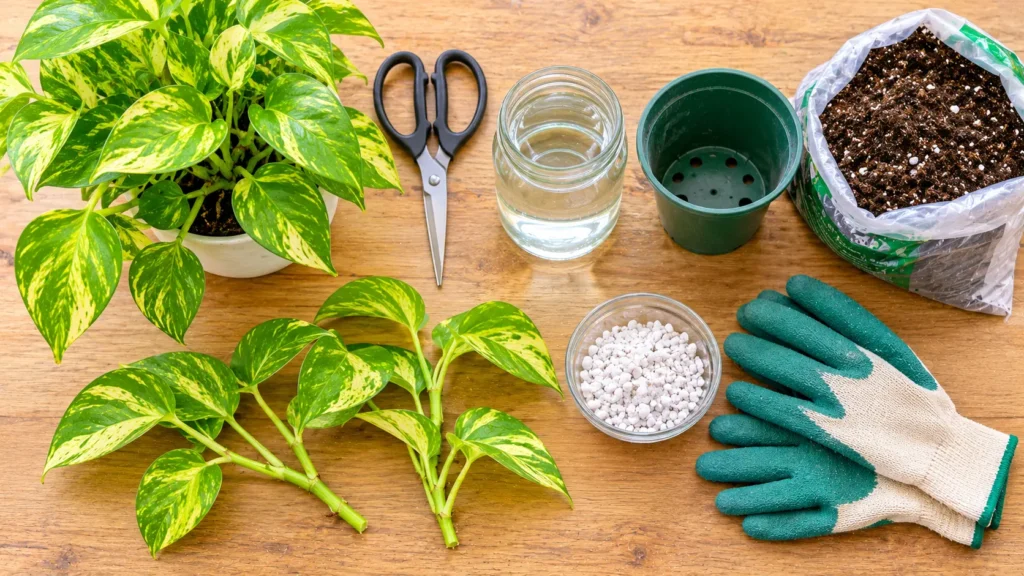
| Supply | Purpose |
|---|---|
| Healthy pothos plant | Provides the stem cuttings |
| Sharp scissors or pruning shears | Makes clean cuts |
| Clear glass or jar | Holds water cuttings |
| Fresh water | Supports water propagation |
| Small nursery pot | Holds soil cuttings |
| Well-draining potting mix | Supports root development |
| Perlite | Improves aeration in rooting media |
| Clean gloves | Helps protect your hands |
Clean your cutting tools before use to reduce the risk of transferring plant diseases.
How to Identify a Pothos Node Before Cutting
Understanding nodes is the most important part of successful pothos propagation. A node is the point along the stem where a leaf attaches and where you may notice a small brown aerial-root bump.
Nodes contain the growth tissue needed for a cutting to develop roots and new shoots. The spaces between nodes are called internodes.
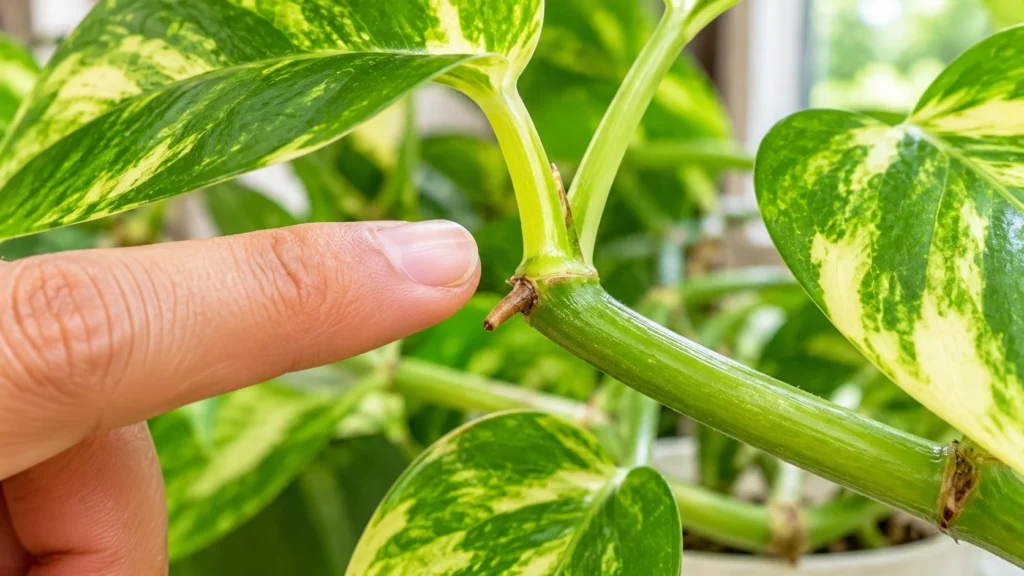
Look for these visible features:
- A small raised bump along the vine.
- A point where a leaf or leaf stalk emerges.
- A small brown or tan aerial-root nub.
- A slight swelling or joint along the stem.
A cutting must contain at least one node. A detached leaf without stem-node tissue may remain green for a while, but it will not develop into a complete new pothos plant.
Where to Cut Pothos to Propagate in Water
The correct cutting position makes a major difference in propagation success. Make your cut approximately a quarter-inch below a healthy node so the cutting retains enough stem tissue around the rooting point.
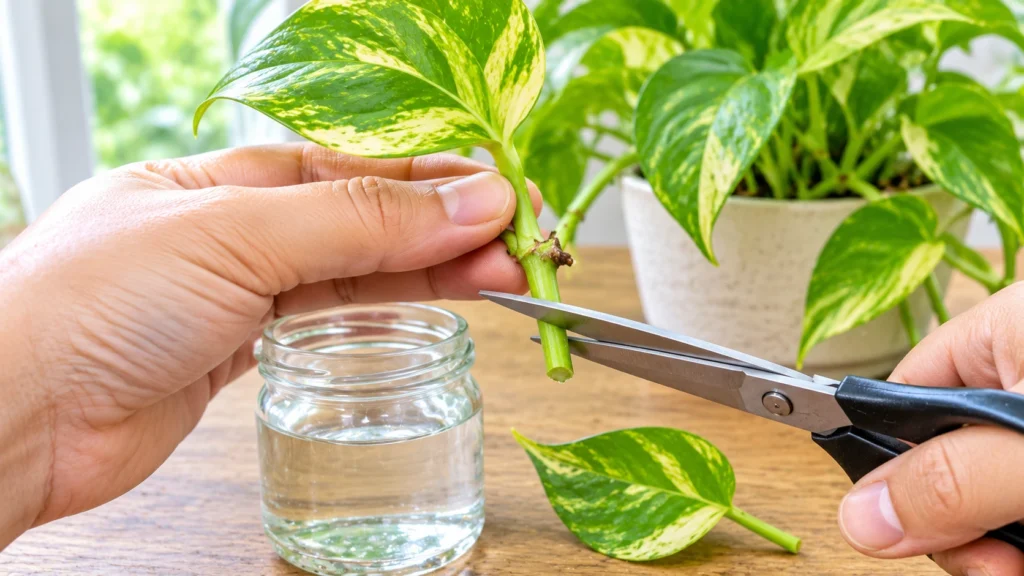
Follow these steps:
- Choose a healthy vine without mushy or damaged sections.
- Locate a node with a healthy leaf above it.
- Position your scissors slightly below the node.
- Make a clean cut without crushing the stem.
- Remove the lowest leaf if it would be submerged in water.
For individual cuttings, try to include one or two nodes and at least one healthy leaf. Longer vine sections can also work if they contain multiple nodes.
Important: Keep enough healthy foliage on the parent plant when pruning. Avoid removing too much growth at once, especially if the plant is already weak.
How to Propagate Pothos in Water
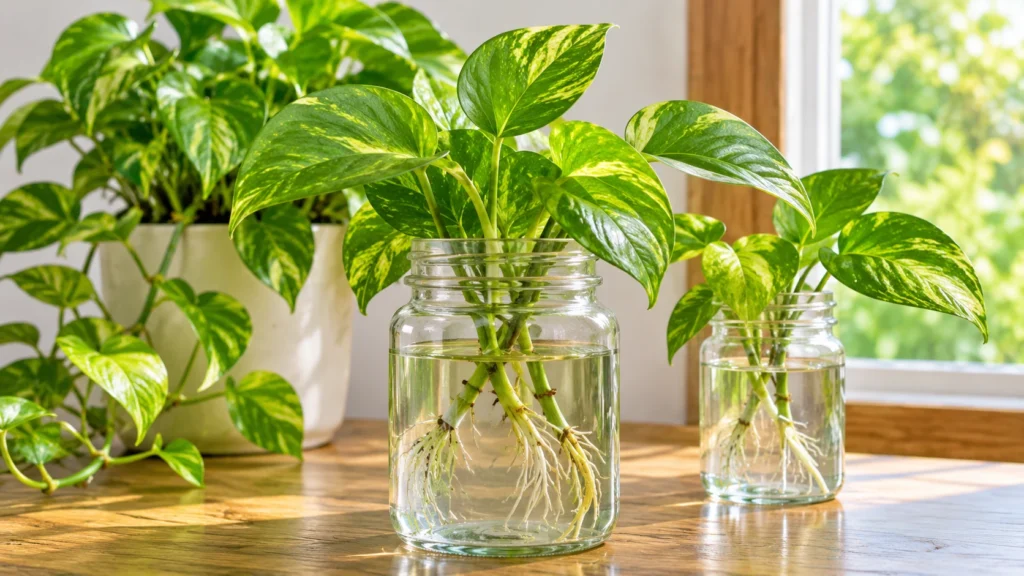
Water propagation is the easiest method for many beginners because you can watch roots develop without disturbing the cutting.
Step 1: Prepare Your Cutting
Choose a healthy vine with at least one node and a healthy leaf. Cut below the node and remove any lower leaves that could fall into the water.
Step 2: Place the Cutting in Water
Fill a clean glass jar with room-temperature water. Position the cutting so the node is submerged while the leaves remain above the waterline.
Step 3: Choose the Right Location
Place the jar somewhere warm with bright, indirect light. Avoid intense direct sunlight because it can heat the water and stress the cutting.
Step 4: Monitor the Water
Check the water level regularly and replace it if it becomes cloudy or develops an unpleasant smell. Clean the container if you notice slime or decaying plant material.
Step 5: Wait for Roots
Small roots may begin appearing within a few weeks, although temperature, light, and cutting health can affect the timeline. Allow the roots to develop before transferring the cutting into a pot.
How Long Does It Take to Propagate Pothos in Water?
Pothos cuttings can begin developing visible roots within approximately 1–4 weeks under suitable conditions. However, growing enough roots for transplanting can take longer.
| Propagation stage | Approximate timeframe |
|---|---|
| Cutting preparation | Day 1 |
| Initial root development | 1–4 weeks |
| Root growth | 3–6 weeks |
| Possible soil transfer | Often around 4–8 weeks |
| New growth after planting | Varies with conditions |
These are general estimates, not guaranteed deadlines. Cooler temperatures, low light, and unhealthy cuttings can slow development.
A useful sign of readiness is a root system with several roots around 1–2 inches long. You can wait until they reach approximately 2–3 inches if you want more established roots before transplanting.
How to Propagate Pothos in Soil
Soil propagation allows roots to develop directly in the environment where the plant will continue growing. It also avoids the need to transfer water-grown roots into potting mix.
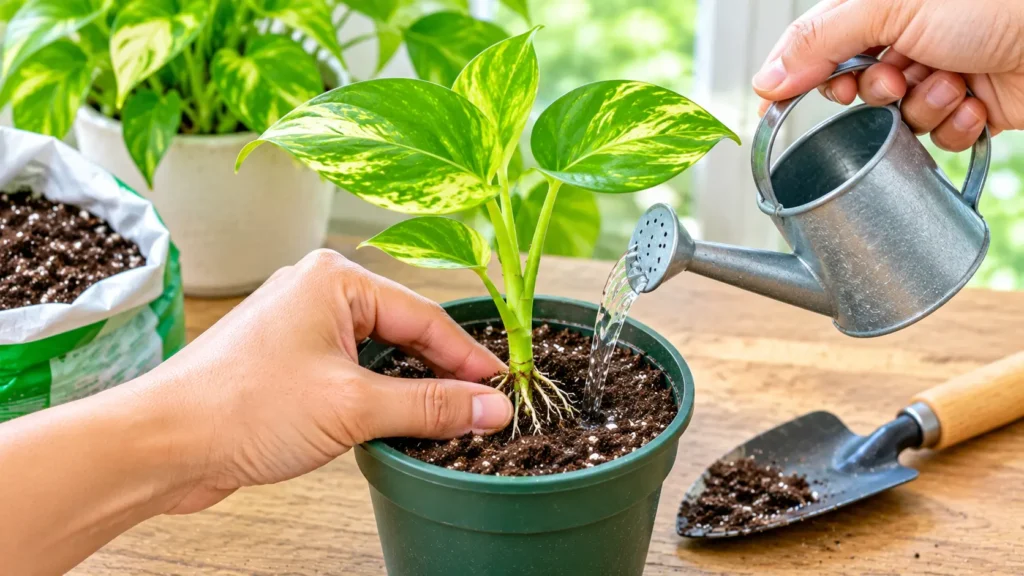
Follow these steps:
- Select a healthy pothos vine with at least one node.
- Cut just below the node using clean scissors.
- Remove leaves from the section that will sit below the soil.
- Fill a small nursery pot with fresh, well-draining potting mix.
- Insert the cutting so at least one node is covered.
- Gently firm the medium around the stem.
- Water lightly and allow excess water to drain.
Keep the medium lightly moist rather than constantly wet. Place the pot in bright, indirect light and check for signs of new growth over the following weeks.
Pothos Propagation in Water vs. Soil vs. Perlite
Not sure which method to choose? Each medium offers different advantages, depending on your experience and available supplies.
| Method | Main advantage | Main drawback | Best for |
|---|---|---|---|
| Water | Roots are easy to monitor | Requires a later soil transfer | Beginners |
| Soil | Roots develop in their final growing medium | Progress is harder to see | Direct potting |
| Perlite | Provides an airy rooting environment | Needs regular moisture monitoring | Experimenting growers |
How to Propagate Pothos in Perlite
Perlite is a lightweight mineral growing medium that improves aeration and drainage. It can be useful for rooting pothos cuttings when kept appropriately moist.
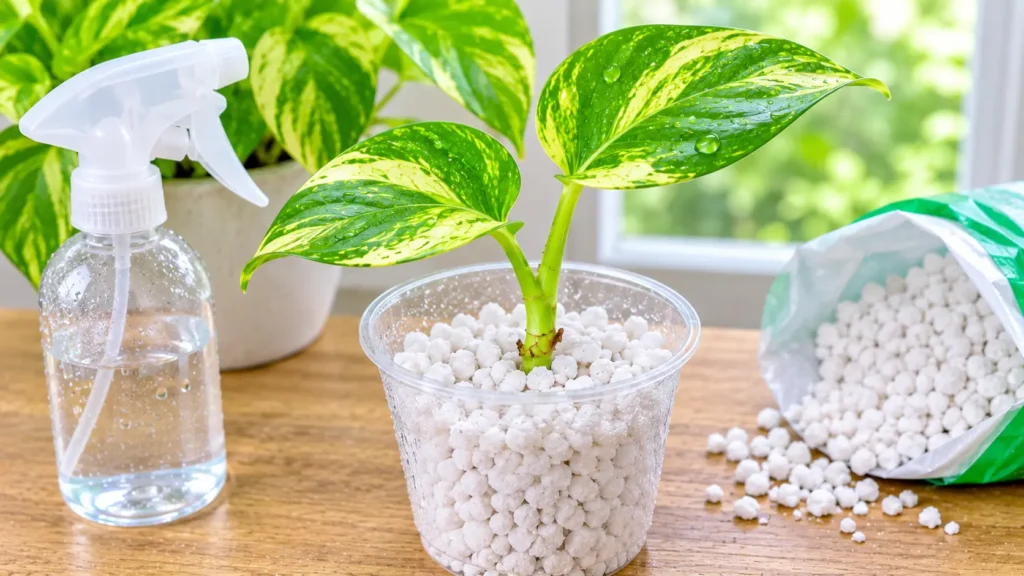
- Fill a small container with clean, damp perlite.
- Insert the cutting so at least one node contacts the medium.
- Keep the perlite lightly moist without leaving the cutting waterlogged.
- Place the container in bright, indirect light.
- Check root development periodically.
- Transfer the rooted cutting into well-draining potting mix once established.
Perlite does not provide the complete nutrition needed for long-term plant growth. Its primary purpose here is to support rooting.
Can You Propagate Pothos Without Leaves?
Yes, a pothos stem section containing a healthy node can potentially develop roots and new shoots even without an attached leaf. However, success depends on the condition of the node and the cutting.
This technique is sometimes called node propagation or wet-stick propagation.
How to try it:
- Select a healthy section of stem with at least one visible node.
- Remove damaged or rotting tissue.
- Place the node in a lightly moist propagation medium.
- Maintain warmth and bright, indirect light.
- Monitor the cutting for signs of rot or new growth.
A leafless node generally takes more patience because it has less stored energy available for new growth. Do not use a leaf-only cutting without a node, as it cannot produce a new vine.
Other Ways to Propagate Pothos
Stem cuttings are not the only option. Mature pothos plants can also be multiplied through layering or root division.
Propagation Through Layering
Layering allows a vine to develop roots while it remains attached to the parent plant.
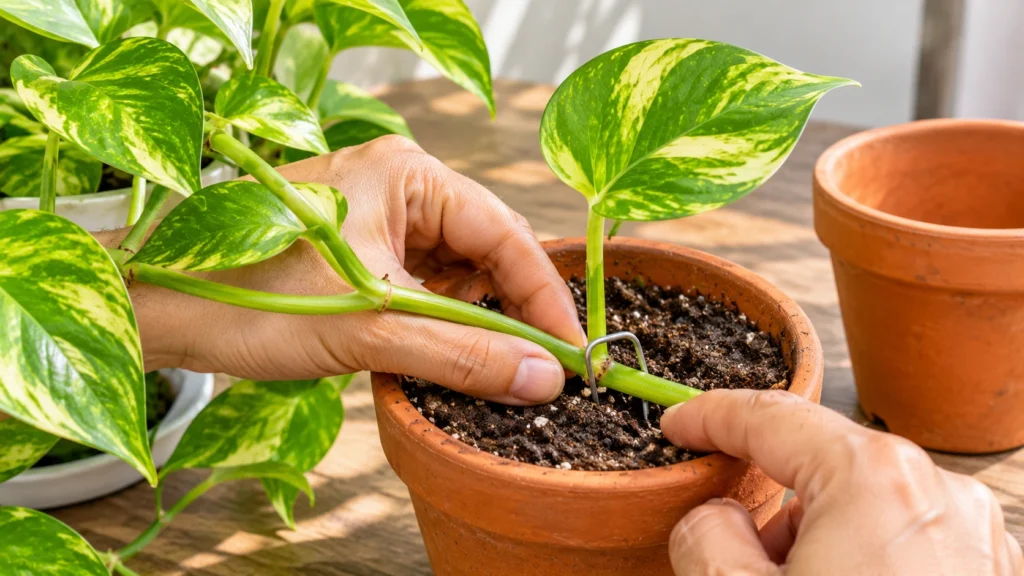
- Choose a healthy trailing vine.
- Position a node against moist potting mix in another container.
- Secure the node gently against the medium.
- Keep the medium lightly moist.
- Once roots develop, separate the rooted section from the parent vine.
This method is useful when you want to reduce the risk of a cutting drying out before rooting.
Propagation Through Root Division
Root division works best when a mature pothos plant has several established stems and root sections.
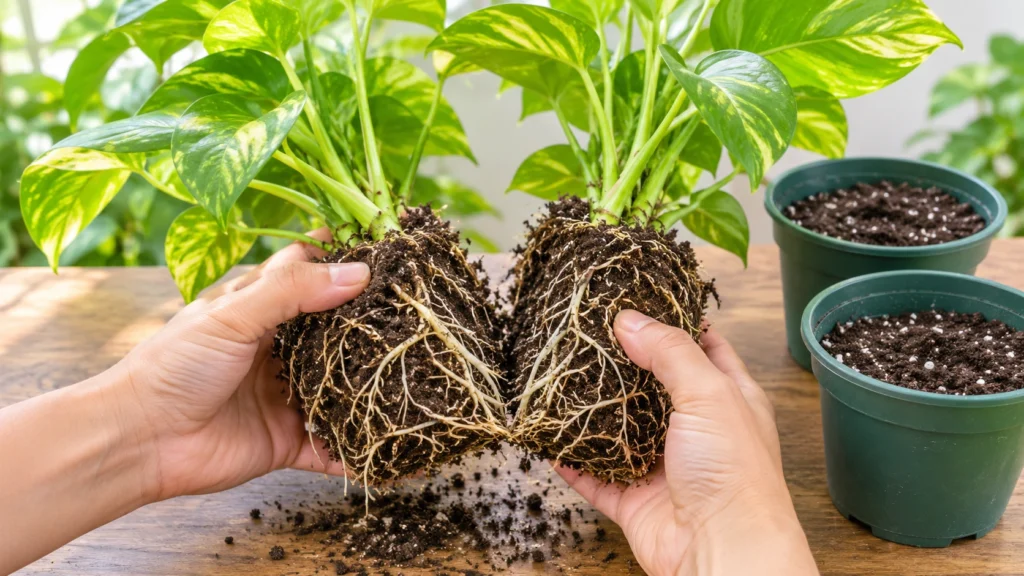
- Remove the plant carefully from its container.
- Examine the root system and identify natural sections.
- Gently separate sections that have healthy roots and stems.
- Place each section into a suitable pot with drainage holes.
- Water and allow the plants to establish.
Avoid pulling apart a plant unnecessarily if its roots are tightly tangled or unhealthy.
Common Pothos Propagation Problems and How to Fix Them
Even easy-to-grow houseplants can experience problems during propagation. Identifying the cause early can help save a struggling cutting.
| Problem | Possible cause | What to do |
|---|---|---|
| No roots developing | Missing node or poor conditions | Check for a healthy node and improve light |
| Mushy stem | Rot or excessive moisture | Remove damaged tissue and use fresh medium |
| Yellowing leaves | Stress or poor water conditions | Check the cutting and water setup |
| Wilting cutting | Moisture imbalance or transplant stress | Review moisture and light conditions |
| Brown or black roots | Root damage or rot | Remove affected tissue and refresh the medium |
| No new leaves | Roots not established yet | Allow more time and maintain stable conditions |
Why Is My Pothos Cutting Rotting in Water?
Rot can develop when the cutting is unhealthy, submerged leaves begin decomposing, or the water becomes stagnant.
Remove the cutting, inspect the stem, and trim any soft, dark, or mushy tissue using clean scissors. Place the healthy portion into a freshly cleaned container with fresh water.
Why Is My Pothos Not Growing Roots?
First, check whether the cutting includes a node. Without a node, a leaf or stem fragment cannot develop into a new plant through ordinary stem-cutting propagation.
Other possible causes include low temperatures, insufficient light, damaged stems, and excessive moisture.
When Is the Best Time to Propagate Pothos?
Spring and summer are generally the most favorable seasons because pothos plants are actively growing under suitable conditions. Warmer temperatures and longer daylight hours can support faster root development.
You can still propagate pothos during fall and winter indoors. However, root development may take longer when temperatures and available light are lower.
How to Care for Pothos After Propagation
Once your cutting develops roots and is planted, give it time to establish before expecting vigorous new growth.
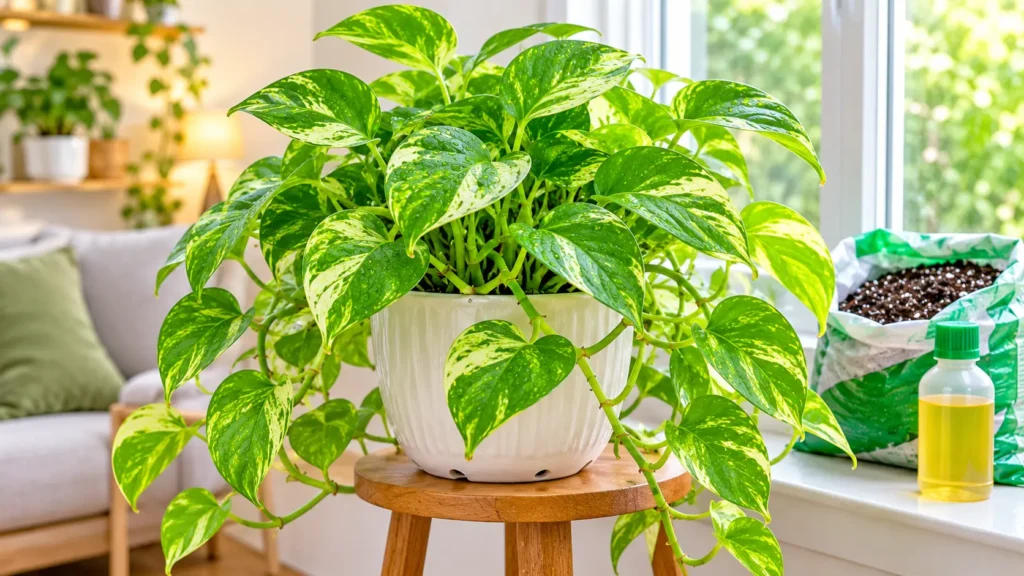
Follow these care tips:
- Light: Provide bright, indirect light.
- Water: Keep the potting mix lightly moist during initial establishment.
- Drainage: Use a container with drainage holes.
- Soil: Choose a well-draining indoor potting mix.
- Temperature: Avoid cold drafts and sudden temperature changes.
- Fertilizer: Wait until the plant shows signs of active growth before beginning a light feeding routine.
Pothos contains insoluble calcium oxalate crystals and is toxic to cats and dogs if chewed or ingested. Keep cuttings, leaves, and new plants away from pets and young children.
Frequently Asked Questions
Final Thoughts
Learning how to propagate pothos is a simple way to turn one healthy houseplant into several new plants. The most important step is choosing a cutting with at least one healthy node and providing the right conditions for root development.
Start with water propagation if you want to watch the roots grow, or try soil and perlite if you prefer other rooting methods. With clean tools, suitable moisture, and patience, you can grow new pothos plants to enjoy, share, or add to your indoor collection.